Chilled Radiance: Inside America's New Obsession With the Refrigerated Beauty Shelf
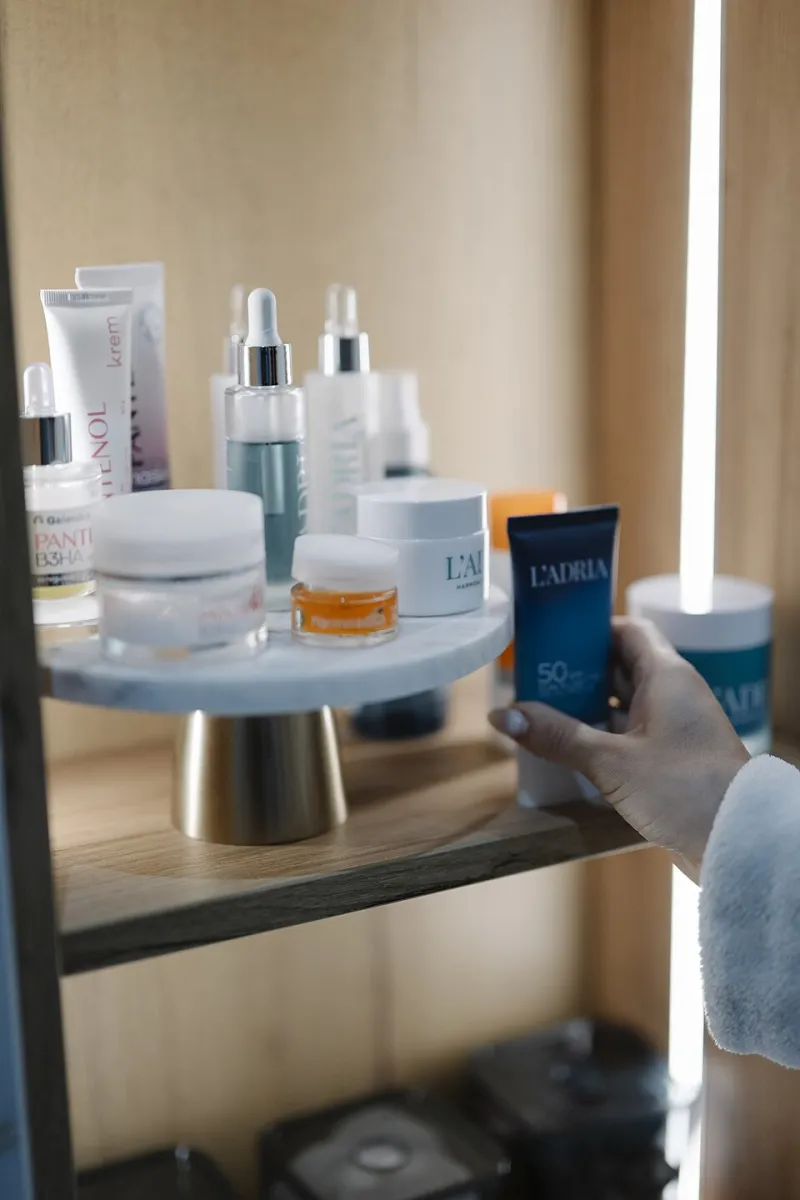
Photo: Shixart1985, CC BY 2.0, via Wikimedia Commons
Somewhere between the oat milk and the leftover takeout, a new ritual has taken hold. Open the refrigerator in any well-lit American kitchen and you may find, nestled beside the berries, a jade roller, a glass bottle of vitamin C serum, and a sheet mask chilled to precisely the temperature of a spa treatment room. The refrigerated beauty shelf has become a fixture of the modern vanity — part science, part ceremony, and entirely in keeping with our belief that radiance is something worth preserving.
But does the cold actually work? Or have we simply assigned luxury to a household appliance?
Why Cold Appeals to Us
There is an intuitive logic to the trend. Light, as any curator knows, degrades what it illuminates — and heat accelerates that decline. Skincare actives, particularly the delicate molecules we prize most, are vulnerable to the same forces. Vitamin C oxidizes. Retinoids break down. Probiotic ferments lose their vigor. A cool, dark environment slows these reactions, which is precisely why the refrigerator, that monument to preservation, has earned a place in the beauty conversation.
The sensory appeal is equally real. A chilled face mist applied at six in the morning delivers a vasoconstrictive tightening — blood vessels narrow, puffiness recedes, and skin looks momentarily more sculpted. It is the skincare equivalent of a cold plunge: bracing, brief, and undeniably effective at making you feel awake.
What Genuinely Benefits From the Chill
Not everything belongs beside the butter. The products that fare best in cold storage share a few traits: volatile actives, water-rich formulas, or short shelf lives once opened.
Vitamin C serums. L-ascorbic acid, the purest and most temperamental form of vitamin C, oxidizes faster at room temperature. Refrigeration slows the darkening that signals degradation. If your serum has begun to turn amber, the chill arrived too late — but as a preventive measure, cold is your ally.
Retinoid and retinol formulations. These are among the most light- and heat-sensitive actives in modern skincare. A cool, dark drawer extends their usable life meaningfully.
Fermented and probiotic formulas. Living cultures slow down — and stay viable longer — at cellar temperatures. If the label instructs refrigeration, believe it.
Eye creams and depuffing gels. Here the benefit is mostly sensory, but no less legitimate. Cold metal applicators and chilled gel formulas constrict fluid retention under the eyes, a small mercy after a salt-heavy dinner or a short night.
Sheet masks and mists. A refrigerated hydrogel mask on a July afternoon in Austin is less a skincare step than an act of self-preservation.
What Cold Quietly Ruins
The refrigerator, for all its virtues, is not a universal spa. Some formulations suffer in the cold.
Oil-based serums and facial oils. Certain plant oils and balms solidify or turn cloudy below about 68 degrees. They usually return to normal at room temperature, but repeated chilling and rewarming can alter texture over time.
Clay and cream masks. Cold can thicken these past their intended consistency, making them difficult to spread evenly — and an uneven mask is an ineffective one.
Anything with a fragile emulsion. Extreme temperature swings — say, moving a product between a steamy bathroom and a cold fridge daily — can destabilize emulsions, causing separation. If you refrigerate, refrigerate consistently.
Products in wide-mouth jars. The condensation that forms on cold glass each time you open the door introduces moisture and, potentially, contamination. If you chill jarred products, keep lids tight and hands clean.
A Practical Protocol
For those ready to formalize the ritual, a simple system suffices. Dedicate a covered bin — the refrigerator door is too warm and too trafficked; a crisper drawer or a small lidded container on a middle shelf is ideal. Keep temperatures stable, ideally between 40 and 50 degrees. Group your temperature-sensitive actives together, label their opening dates, and resist the urge to chill everything: the goal is preservation, not performance art.
And a note on what not to do: never freeze skincare. Freezing ruptures emulsions and can render actives inert. The refrigerator's cool restraint is the point — not the deep cold of the freezer.
The Deeper Appeal
It would be easy to dismiss the refrigerated beauty shelf as another aesthetic trend, another way of making routine feel rarefied. But there is something quietly coherent in it. We think of light as the source of radiance, yet light — and the heat that travels with it — is also what degrades the molecules we depend on. The refrigerator is, in its own humble way, a darkened gallery: a place where the most luminous versions of our formulas are kept intact, waiting for the moment they are needed.
The beauty industry has long sold us the idea that radiance comes in a bottle. Perhaps it is more accurate to say that radiance is protected — from heat, from air, from the slow chemistry of decline. The cold-light kitchen is simply where that protection happens to live now, one carefully chilled serum at a time.