After Sundown, the Rules Change: In Defense of the Lipstick You Only Wear at Night
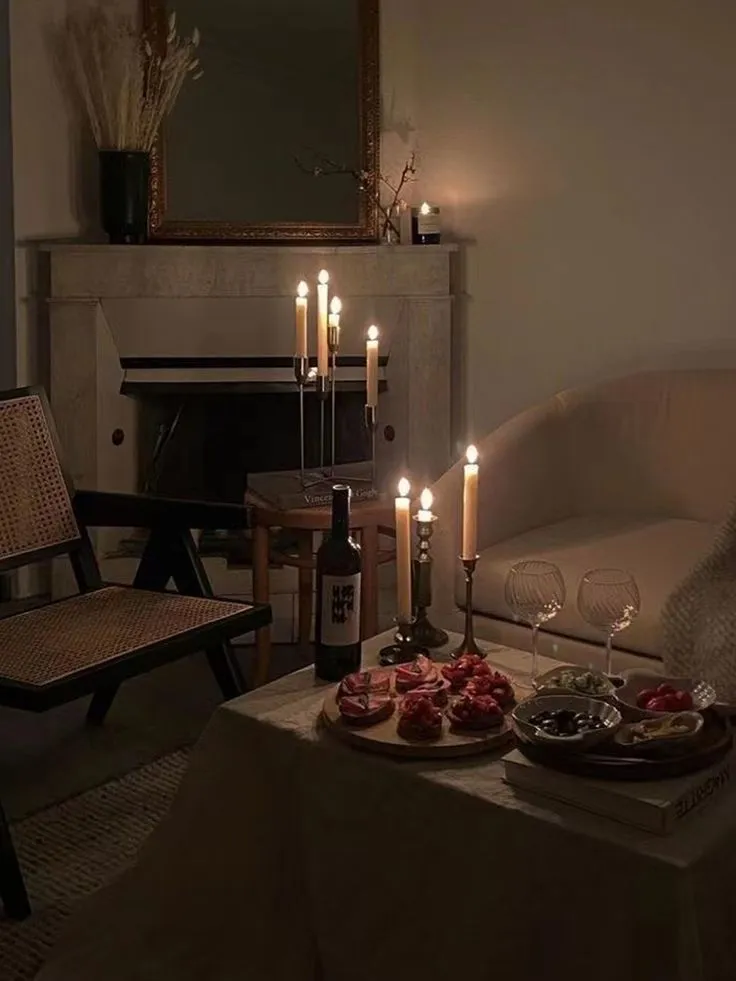
Photo: woman dark plum lipstick candlelit evening dinner table moody light, via i.pinimg.com
There is a particular shade of plum that has lived in the back of my makeup drawer for three years. In daylight, it reads as too much—too dark, too deliberate, a color that announces itself before you've said a word. But take it to a candlelit table, a porch at nine o'clock in August, a rooftop bar with the city humming below, and something shifts. The light softens. The color exhales. Suddenly it isn't too much at all. It's exactly right.
We don't talk enough about this: that some makeup is designed for a different hour. The beauty industry sells us daytime logic—brightness, polish, restraint—but the evening operates by its own optics. Low, warm light scatters differently across the skin. Shadows blur what the noon sun would sharpen. Colors deepen rather than flatten. A wine-stained lip that looks severe in an office looks opulent over dinner.
The Physics of the Evening Face
There's a reason candlelight has been the flatterer of choice for centuries. Warm artificial light—incandescent bulbs, flickering flames, the amber glow of a streetlamp—emphasizes the warm undertones in pigment. A blue-based berry lip gains richness. A terracotta brick shade turns almost velvety. Meanwhile, the cool, diffuse light of midday does the opposite: it exposes every nuance, every edge, every decision.
This is why the same lipstick can feel like a costume at breakfast and a signature by nightfall. The shade didn't change. The light did. Understanding this reframes what we call "bold" makeup. Some colors aren't bold at all—they're simply nocturnal. They belong to the same category as evening gowns and jazz: things that require a certain darkness to be fully seen.
A Field Guide to After-Dark Shades, by City
If you want to understand a nocturnal lip, take it on the road. American cities each offer their own version of evening light, and each flatters a different family of color.
New Orleans is the patron city of the after-dark lip. On a shotgun porch in the Marigny, under a string of bulbs and the humid violet sky, deep oxblood and blackberry shades feel less like makeup and more like atmosphere. The city's warmth amplifies every red undertone.
Seattle rewards the cool-toned daredevils. On a rooftop in Capitol Hill at dusk, with the Sound going silver and the sky a cold pewter, a blue-based plum or a near-black cherry reads as sophisticated rather than severe. This is weather that makes moody lips look inevitable.
Santa Fe at sunset is a masterclass in warm light. The adobe walls hold the day's heat long after the sun drops, and against that glow, burnt sienna and terracotta lips—shades that might vanish in northern light—look like they were painted on by the landscape itself.
New York, of course, can handle anything. But there is something singular about a deep garnet lip under the sodium glow of a West Village street at 11 p.m. The city's mixed, chaotic light—taxi yellows, neon pinks, the cold white of bodegas—means only the richest, most saturated shades hold their own. Go deep or go home.
The Small Freedom of Getting Dressed for the Dark
There is a quiet liberty in wearing something that has no intention of surviving daylight. Morning makeup is often worn for other people—for meetings, for errands, for the version of yourself the world needs to see. Evening makeup, at its best, is worn for the hour itself. A dark lip applied at dusk, knowing it will fade by midnight, knowing almost no one will see it in full sun, is a small act of self-possession.
Perhaps that's the real appeal of after-dark beauty. It asks nothing of the daylight. It doesn't need to be justified, maximized, or optimized. It exists for a few hours of candle glow and conversation, and then it's gone—a beautiful, temporary thing.
So the next time you hesitate over a shade that feels like too much, ask instead: too much for when? Some colors are simply waiting for the sun to leave. Let them.