Mile Marker Radiance: The Improvised Skincare Ritual of the American Highway
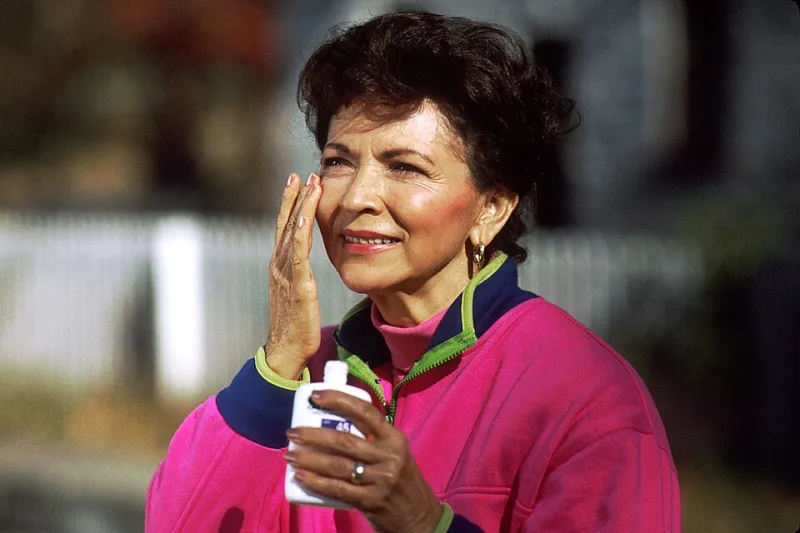
Photo: Bill Branson (photographer), Public domain, via Wikimedia Commons
There is a particular quality to light on an interstate. It arrives unfiltered through the windshield at seven in the morning, pools against the passenger window by noon, and lingers, low and amber, across the dashboard as the sun drops behind a ridgeline somewhere outside Amarillo. For millions of Americans each summer, this light is not a backdrop to a vacation. It is an exposure event—measured in hours, not minutes—and the beauty industry has quietly reorganized itself around it.
Walk into any travel plaza between here and the coast and you will find the evidence: a modest rack of SPF sticks, hydrating facial mists, depuffing rollers chilled in a half-stock refrigerator, and travel-size cleansers stacked beside the beef jerky. The road trip, long celebrated as an American rite of passage, has become something else entirely—a nomadic, improvised skincare ritual conducted at seventy miles per hour.
What the Windshield Actually Does
The science behind the ritual begins with the glass itself. According to dermatologists, automotive windshields are laminated and effectively block UVB rays—the burning variety. The danger, they explain, comes from UVA radiation, which passes readily through side and rear windows and penetrates more deeply into the skin, contributing to pigmentation, collagen breakdown, and the slow accumulation of what researchers sometimes call 'driver's damage.'
The asymmetry is real and, for long-haul drivers, occupational. Studies of American truckers have repeatedly documented greater photoaging on the left side of the face—the window side. For the average summer road-tripper logging eight hours from Denver to Moab, the exposure is less dramatic but cumulative nonetheless. Skin scientists recommend treating a long drive the way one treats a beach morning: broad-spectrum protection applied before departure, reapplied at every fuel stop, and never reserved only for the destination.
The Pit-Stop Pharmacy
What distinguishes the highway routine is its constraint. No vanity, no ten-step regimen—only what fits in a cupholder or a glovebox. Frequent road-trippers describe a kind of minimalism born of necessity, and the products they gravitate toward share a common logic: light in, light managed.
- Mineral SPF sticks. Waxed, glide-on, and applied one-handed, they have become the unofficial mascot of the highway routine. Swipe across the cheekbones, jaw, and neck at every stop.
- Facial mists. Cabin air conditioning dehydrates faster than desert wind. A fine mist with glycerin or thermal water restores surface hydration without disturbing makeup or sunscreen.
- Cooling rollers and gel patches. Kept cold in the cooler alongside the drinks, these do double duty against puffiness after long stretches of sitting.
- Stick cleansers and micellar wipes. For overnight motel stops, the routine shrinks to sixty seconds—remove, replenish, sleep.
The travel aisle, once an afterthought, now reflects genuine formulation effort. Several drugstore brands have released road-trip-specific kits, and independent labels increasingly market 'glovebox beauty' as its own category.
A Conversation at 65 Miles Per Hour
For many travelers, the ritual is less about vanity than about marking time. 'Every rest stop is a reset,' says one frequent cross-country driver, who describes a two-minute routine—SPF stick, mist, lip balm—performed in the rearview mirror at gas stations from Pennsylvania to Utah. 'It's how I know what state I'm in.'
Dermatologists see the appeal, with one caveat: improvisation should not mean omission. The most common road-trip mistake, they note, is treating sun protection as a destination behavior—applied at the lake, forgotten in the car. The windshield creates a false sense of shelter. The light still finds you; it simply arrives differently.
The Luce Pit-Stop Shopping Guide
Before your next departure, a short list worth committing to memory:
- A broad-spectrum SPF 30+ stick — the backbone of the routine. Reapply every two hours without leaving the driver's seat.
- A hydrating mist — glycerin-based, alcohol-free, small enough for the console.
- A tinted lip balm with SPF — lips burn faster than cheeks and are forgotten more often.
- A single-serve moisturizer — for the motel sink and the morning after.
- Sunglasses with true UV protection — the periorbital skin thanks you.
There is something fitting, perhaps, that a country built on movement would develop a beauty practice to match—modular, portable, performed in stolen minutes under a wide sky. Radiance, after all, was never meant to wait at home. Sometimes it rides shotgun.