The Diffused Truth: Why Community Halls Were America's First Honest Beauty Studios

Photo: soft diffused window light church basement community hall interior, via gstatic1.promeai.pro
There is a particular quality of light that most American women of a certain age can describe without hesitation: the pale, even wash that filled the church basement where the wedding shower was held, the diffuse brightness over the library reading table, the unglamorous glow of the VFW hall during a Sunday potluck. Nobody designed that light to flatter. And that, precisely, is why it told the truth.
At Luce, we spend a great deal of time thinking about illumination—the kind we bottle, the kind we chase, the kind we invent. But there is a case to be made for the light nobody chose: the ambient, bounced, secondhand daylight of American community spaces. Call it midlight. It may be the most honest assessor of a complexion our culture has ever produced.
The Architecture of Honesty
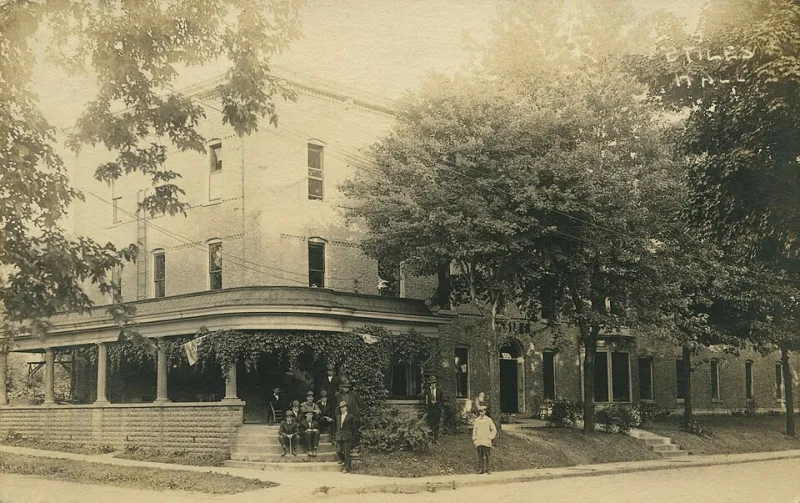
Community buildings in small-town America were rarely designed with beauty in mind. They were built cheaply, lit generously, and heated unevenly. Their windows sat high on the walls or faced north; their interiors were painted the flat whites and pale yellows of institutional paint. The result, whether anyone intended it or not, was a lighting environment of remarkable neutrality.
Direct sunlight exaggerates. Overhead incandescents dramatize. But diffused daylight—light that has bounced off pavement, filtered through frosted glass, or scattered across a plaster ceiling—arrives from everywhere at once. It fills in shadows rather than casting them. Under such light, the skin cannot hide behind a flattering angle, and it cannot be condemned by a harsh one. It simply appears as it is: texture, tone, hydration, all reported without commentary.
Dermatologists have long understood that diffuse illumination is the gold standard for clinical skin assessment. Photographers know it as the quality they spend thousands of dollars to recreate with softboxes. Small-town America got it for free, poured into every cinderblock basement and Carnegie-era reading room in the country.
What the Basement Mirror Knew
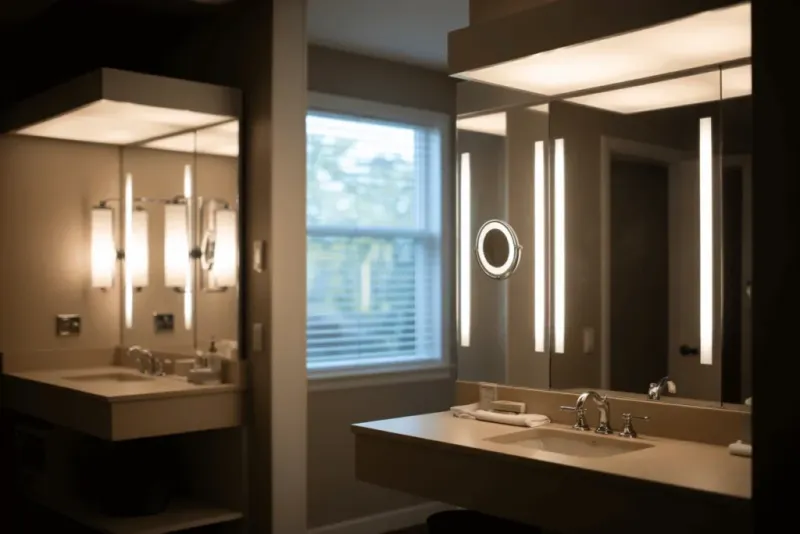
Consider what happened in those rooms. Women gathered for showers, funeral lunches, quilt circles, and choir practice—occasions that called for looking closely at one another's faces, and at their own in the restroom mirror down the hall. That mirror, lit by a window around the corner rather than a bulb above the sink, offered something almost no home vanity could: a complexion read under neutral conditions.
The assessments made there were famously unvarnished. A woman could see that her skin was dehydrated before she'd heard the word 'barrier.' She could spot the difference between a true dark spot and a shadow that better lighting had merely invented. There was no filter, no flattering warmth, no theatrical contrast—only a level field of illumination on which every face was judged by the same standard.
There is something worth reclaiming in that. The modern beauty environment is an ecology of distortion: warm bulbs that forgive everything, LED mirrors that sculpt shadows into cheekbones, screens that brighten and blur. We have optimized every viewing condition to be either kind or cruel, and in doing so we have lost the middle register—the truthful one.
Finding Your Midlight
The good news is that midlight is not a place; it is a condition, and it can be recreated nearly anywhere. The principle is simple: you want daylight that arrives indirectly, from a broad source, at your skin's own level.
Start with the window test. Stand facing away from a window on an overcast morning and look into a mirror placed near that window. Cloud cover is nature's softbox—it scatters the sun into an enormous, gentle source. If your region enjoys clear skies, a north-facing window in the late morning will do, since northern light never receives direct sun in the Northern Hemisphere.
Bounce what you have. A white wall, a pale towel, even a sheet of foam board propped opposite a window will scatter direct light into diffuse light. The goal is to eliminate the single bright point and replace it with a field of illumination.
Audit your mirror's position. The worst place to evaluate your skin is beneath a downward-facing bulb, which carves shadows into every pore and line. Move a small mirror to a windowsill and assess your complexion there instead—morning for most skin concerns, since afternoon light carries a warmer cast that flatters at the expense of accuracy.
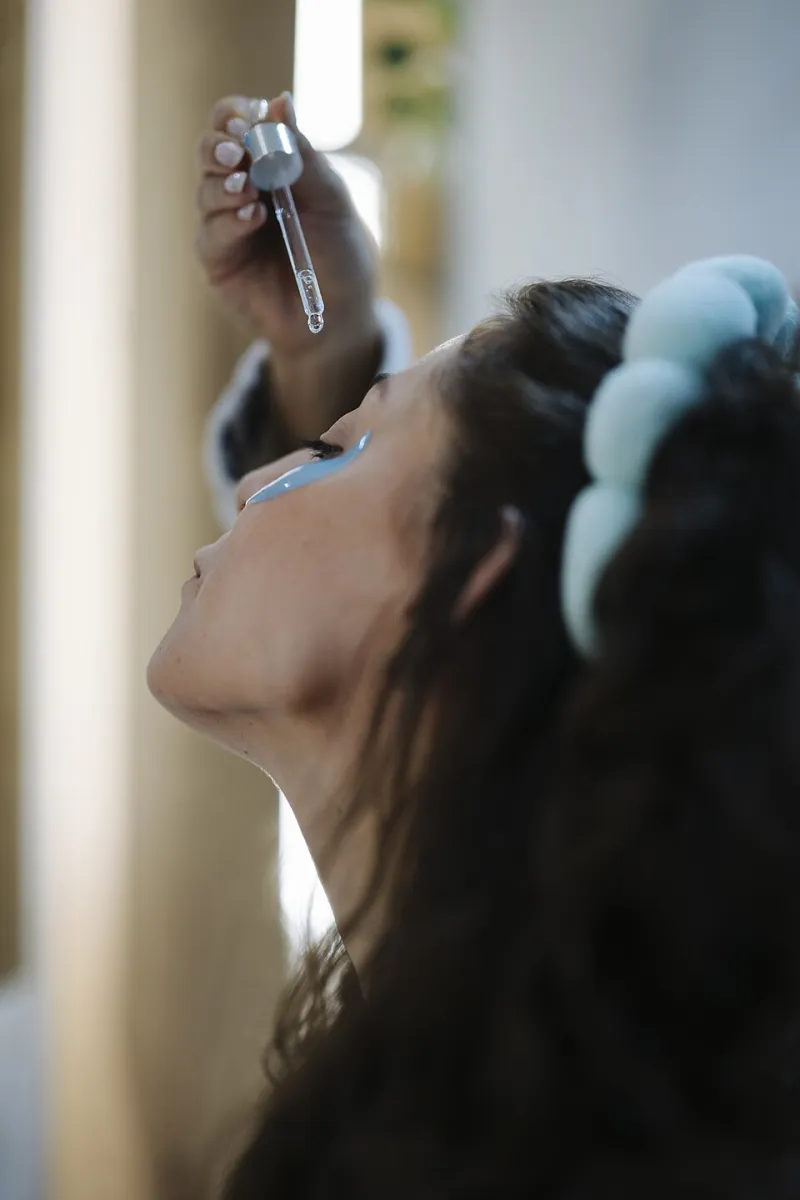
Keep one honest hour. Once a week, perform your real skin assessment—serums, spot checks, tone evaluation—in midlight. Let the vanity bulb handle the eyeliner; let the window handle the truth.
The Fairest Judge
There is a quiet radicalism in choosing to see yourself under honest light. The beauty industry profits from distortion in both directions—flaws magnified and perfection fabricated. Midlight refuses both transactions. It neither accuses nor absolves.
The women who did their self-assessment in church basements and library reading rooms were not primitive; in one respect, they were ahead of us. They knew their faces under the only light that never lied. We would do well to borrow a little of that illumination—literally—before we decide what our skin needs next.