The Hour of Soft Light: What Really Happens to Your Skin After Sunset

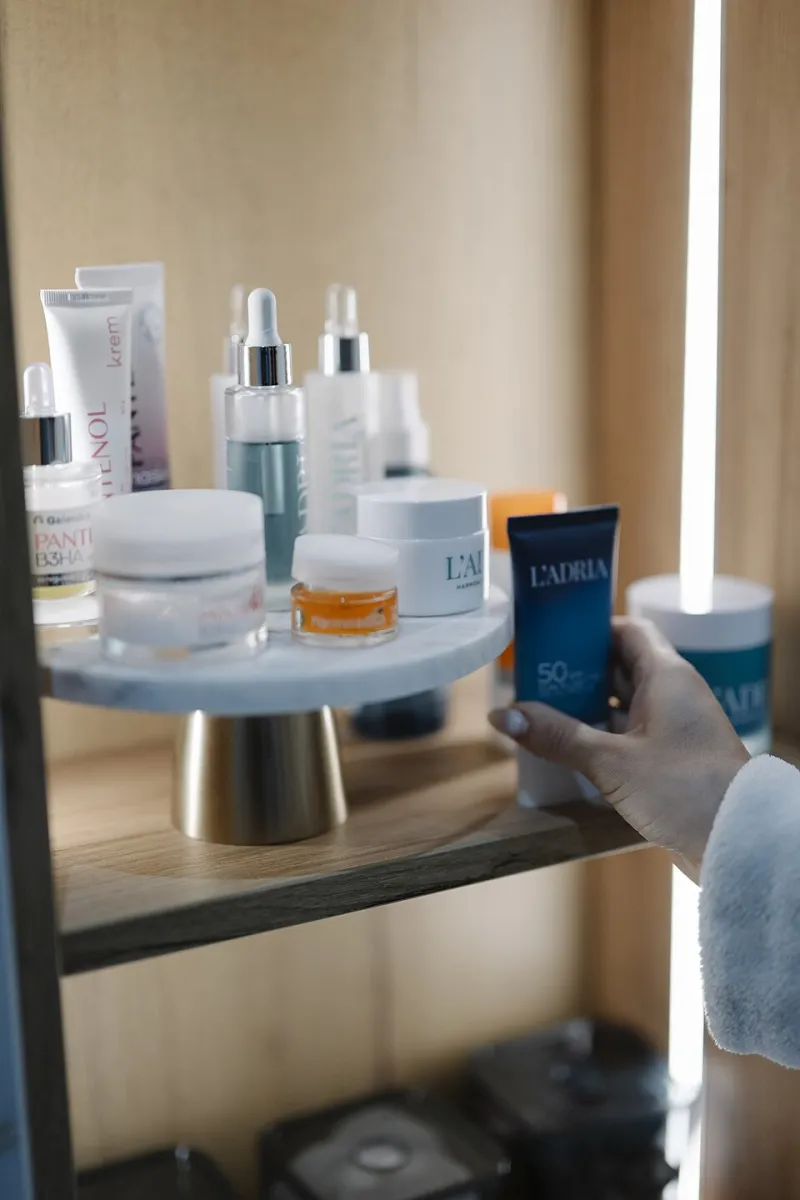
Photo: candlelit vanity table with skincare bottles warm evening light, via i5.walmartimages.com
There is a reason the winter holidays feel inseparable from candlelight. Between the early sunsets of November and the long stretch of festivities that carry us through New Year's, Americans spend more waking hours in low, warm artificial light than at any other point on the calendar. The dinner party begins at dusk. The fireplace is lit before six. And somewhere between the last of the daylight and the first sip of wine, something subtle happens: faces change.
Not because skin has transformed—but because the conditions under which we see it, and the conditions under which it operates, have both shifted. Understanding that dual shift is the key to an evening routine that actually earns its keep.
Why Candlelight Flatters—and What It Hides
Warm light sources, from tapers to amber bulbs, emit far less of the short-wavelength blue spectrum than midday sun. Blue light is what reveals texture, redness, and pigment contrast with unsparing precision; remove it, and the complexion appears smoother, more even, and—crucially—more luminous. Photographers have exploited this for a century. Cosmeticians built entire shade ranges around it.
But flattery has a cost: low light also conceals. That dry patch you noticed in the bathroom mirror at noon will still be there at midnight, invisible under the glow of the dining room chandelier. The evening hour is when skin looks its best and, paradoxically, when we scrutinize it least. A thoughtful nighttime routine exists precisely to close that gap—treating what the candlelight spares you from seeing.
The Night Shift: Your Skin's Actual Schedule
Beneath the aesthetics lies biology. Skin keeps a circadian clock of its own, and the evening hours mark a handoff of duties. During the day, the organ is largely defensive—thicker-seeming, oil production elevated, barrier on alert against UV and pollution. After dark, the emphasis reverses. Cell turnover accelerates. Blood flow to the skin increases. Repair mechanisms, including DNA maintenance and barrier lipid synthesis, ramp up in the late evening and hold steady through the first half of the night.
Researchers call this the anabolic phase, and its practical implication is simple: what you apply in the hour or two before bed is applied to skin that is actively rebuilding itself. Evening is not merely a convenient time for actives. It is the time they were, in a sense, designed for.
An Evening Formulary, Ingredient by Ingredient
Not every star ingredient belongs after dark. Retinoids, for instance, famously degrade in sunlight, which is why they've always lived on the nightstand. But the broader evening formulary deserves the same intentionality. Consider three categories that work in genuine sync with nocturnal biology:
Peptides. These short amino acid chains signal skin to support collagen and elastin production—processes that peak overnight. Applied in the evening, peptide serums and creams are effectively speaking the skin's own after-hours language. Look for copper peptides or signal peptides like Matrixyl near the top of an ingredient list.
Squalane. Barrier lipid synthesis continues through the night, and a lightweight occlusive-adjacent oil like squalane complements rather than interrupts it. It mimics the skin's own squalene, sealing in the evening's water-based treatments without the heaviness of petrolatum. A few drops pressed over a peptide serum is as close to a uniform as winter evenings get.
Overnight masks. The sleeping mask—long a staple of Korean routines, now firmly mainstream in the US—formalizes what the circadian cycle already does. Formulated with humectants like hyaluronic acid and slow-release emollients, these products are designed to be the last layer before bed and the first thing your skin drinks from at 2 a.m.
One caution: the evening is not the moment to stack every active at once. Two or three well-chosen products outperform a cabinet's worth applied in sequence, and the skin's repair window rewards consistency far more than intensity.
The Psychology of the Lit Room
There is a final, less measurable element worth acknowledging. Dermatologists and psychologists alike have noted that how we perceive our skin shapes how we care for it. In the flattering hush of a candlelit room, women consistently report feeling more confident—a phenomenon cosmetic chemists sometimes describe as ambient confidence, distinct from any product effect.
Rather than dismiss this as illusion, consider it a design principle. The evening ritual—dim lights, warm scents, unhurried application—is itself part of the treatment. Stress hormones like cortisol interfere with barrier repair; a calming environment lowers them. The candle, in other words, is not merely decoration. It is co-therapy.
A Ritual for the Long Winter Nights
As the holidays approach and the sun sets before many of us have left the office, the evening offers a rare gift: time. Not the rushed five minutes of the morning mirror, but an unhurried hour in which skin is primed to receive and the mind is primed to rest.
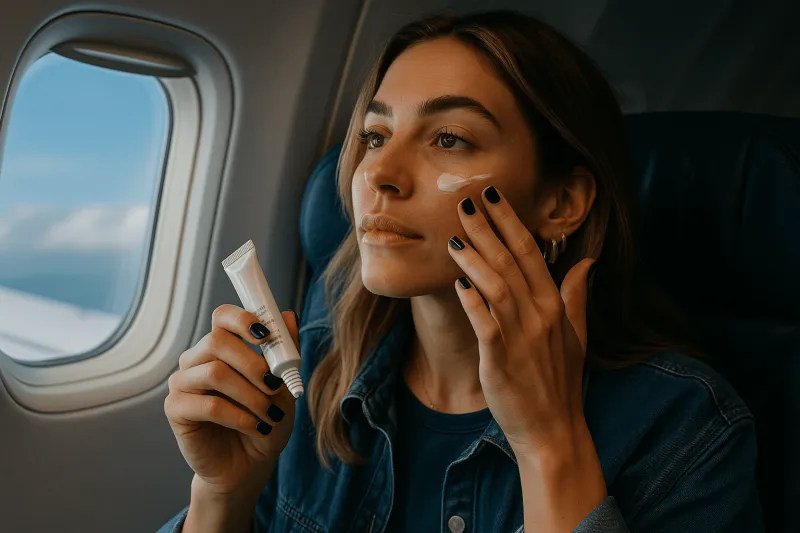
Cleanse thoroughly to remove the day's sunscreen and city residue. Apply a peptide serum while skin is still slightly damp. Seal with squalane or a barrier cream, and once or twice a week, finish with an overnight mask in place of your usual moisturizer. Then dim the lights, pour something festive, and let the biology do what it does best after dark.
The daylight may own the hours of defense. But the night—soft, warm, and generous—owns the repair. Meet it there.