Sixty-Six Days of Dark: Lessons From the Town Where the Sun Skips Winter
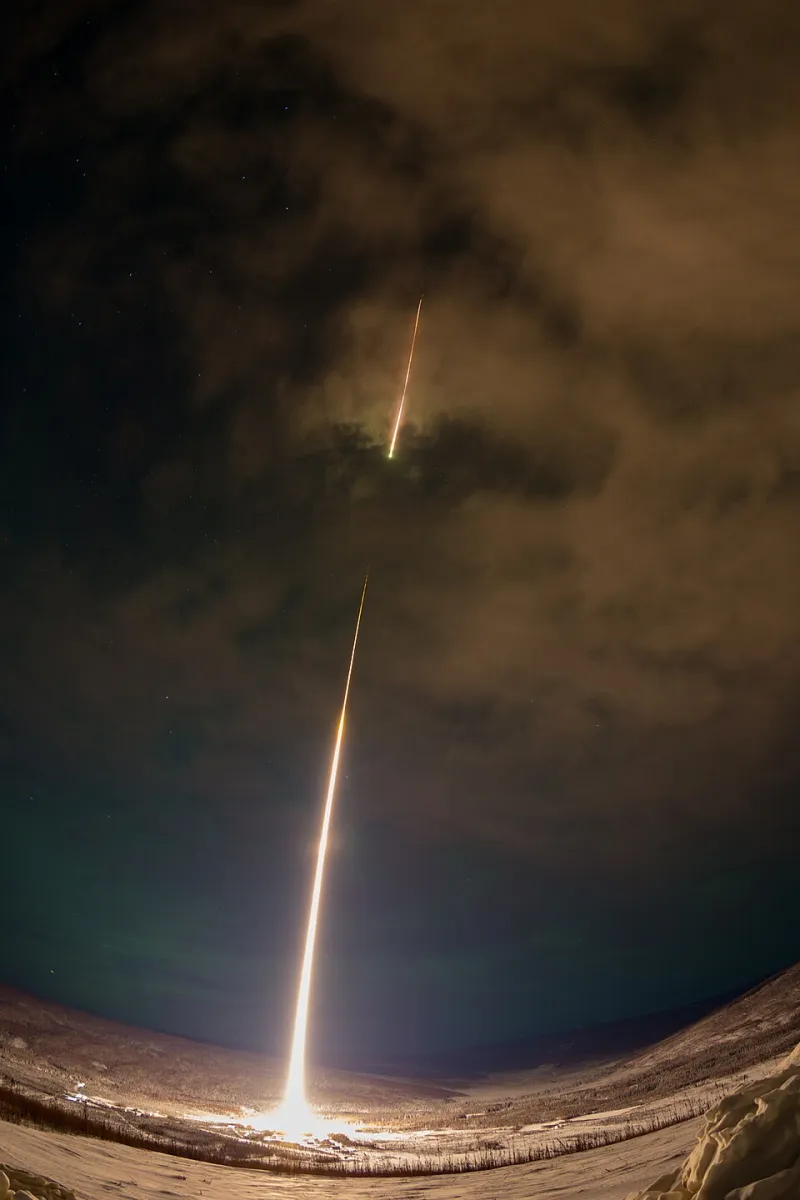
Photo: NASA Goddard Space Flight Center from Greenbelt, MD, USA, Public domain, via Wikimedia Commons
At 1:43 p.m. on November 18, the sun drops below the horizon in Utqiagvik, the northernmost town in the United States, and it does not come back for sixty-six days. No dawn. No dusk. Just a long blue twilight that the residents of Alaska's Arctic Slope treat, with some amusement, as weather rather than crisis.
Most of America will never experience the polar night. But tens of millions of people from Spokane to Syracuse to Burlington live through its milder cousin every year — weeks of short, low, gray days when the light famine is real even if the sun technically shows up. What happens to skin and body under true darkness is therefore not a curiosity. It is a preview.
What the Dark Does to Skin
Counterintuitively, the polar night is not a vacation for the complexion. Dermatological research from high-latitude populations points to a consistent cluster: increased transepidermal water loss as heated indoor air desiccates the barrier, sebum rhythm disruption as circadian signals drift, and a measurable dulling that residents describe as skin "going gray with the sky."
"The skin keeps a circadian schedule whether or not the sun does," explains one researcher studying light and physiology at northern latitudes. "Barrier repair, lipid production, cell turnover — all of it is timed to an internal clock that expects a dawn signal. Take the dawn away and the schedule loosens."
Then there is vitamin D, the nutrient whose cutaneous synthesis requires UVB — precisely the wavelengths absent for months. Residents of Utqiagvik rely on diet and supplementation, and dermatologists suggest that Americans above roughly the 37th parallel should think of themselves as seasonal synthesizers: from about November through February, the sun is too low to do the job regardless of exposure.
The Circadian Story
The deeper finding from polar-night communities is about rhythm more than radiance. People who fare best through the dark are rarely the ones who fight it. They are the ones who impose structure: strict wake times, bright artificial light in the morning — ideally 10,000-lux boxes that mimic a sunrise the window refuses to deliver — and a deliberate evening dimming that lets melatonin do its work.
Sleep researchers who study Arctic towns report that mood and skin both track adherence to these rituals. Poorly timed light — screens at midnight, darkness until noon — produces the familiar winter presentation: dull skin, heavy eyes, a face that reads as tired even when it isn't.
A Practical Protocol for the Light Famine
For readers in the northern tier, the polar night offers a template rather than a warning:
- Anchor the morning. A dawn-simulator alarm or 20–30 minutes with a light therapy box within an hour of waking does more for winter complexion than any serum on the shelf.
- Feed the barrier. Heated air is the polar night's true skin threat. Heavier creams, humidifiers, and lukewarm cleansing are not indulgences; they are climate adaptation.
- Supplement what the sun withholds. Vitamin D status is a winter variable, not a constant — worth discussing with a physician rather than guessing.
- Dim on purpose. The evening downgrade — warm lamps, screens down, earlier hours — protects the repair work skin does overnight.
The Light We Choose
There is something instructive in how Utqiagvik meets its darkness: not with denial, and not with despair, but with ritual. The town schedules events through the dark weeks. The return of the sun in late January draws crowds outdoors to watch the first sliver clear the horizon — a communal act of welcome that most of us have never thought to perform.
Perhaps that is the real lesson. Radiance in winter is not a cosmetic achievement. It is a negotiation with light — accepting less of it, timing what you get, and caring for the skin that must carry you through. The polar night simply makes the negotiation explicit. The rest of us are making the same bargain, one short day at a time, whether we notice or not.