The Waiting Rooms of Artificial Noon: An Oral History of the Tanning Salon and the Glow It Owed Us
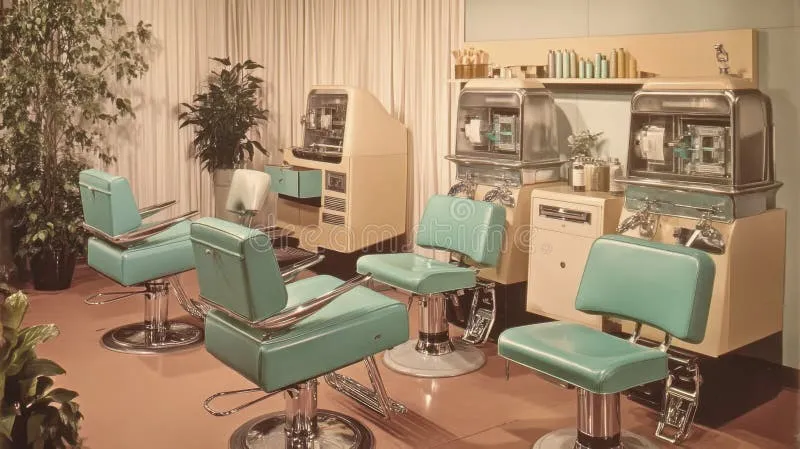
Photo: vintage tanning salon waiting room interior chairs, via thumbs.dreamstime.com
The salon on Route 9 opened at nine, but the regulars knew the beds warmed up better by ten. They came anyway — before prom, before a sister's wedding, before the first tentative weekend at the lake — and they sat in the same vinyl chairs, under the same humming fluorescents, waiting for a machine to hand them the one thing their winters withheld.
What happened in those waiting rooms has never been fully written down. It should be, because for three decades the tanning salon was one of the last genuinely shared female spaces in small-town America — a place without a cover charge, without an appointment culture, without anyone checking a phone. Just time, fluorescent honesty, and talk.
The Lobby as a Living Room
Ask former regulars what they remember and they rarely mention the beds first. They mention the conversation.
"It was the only place my mother and I went together that wasn't church or a hospital," says one woman who spent her twenties in a Michigan salon she declines to name. "We'd wait our turn and she'd tell me things she never said at home. Something about that room loosened people up."
There is a sociology here. The salon lobby asked nothing of its visitors. No purchase minimum beyond the session itself, no dress code, no performance of wellness. Women came in snow boots and work scrubs and bridesmaid dresses on hangers. The light inside was deliberately unflattering — the opposite of the glow being sold — and perhaps that was the point. You could be tired, blotchy, mid-breakout, and no one in the waiting room cared. Everyone was there for the same reason: the sky had failed them and they were doing something about it.
What the Glow Meant
Dermatologists are right, and the record must be clear: the machines delivered damage. UVA doses in typical beds far exceeded what midday summer sun provides, and the melanoma statistics among women who came of age in the 1980s and 1990s bear this out with grim precision.
But meaning and damage are not the same ledger, and oral history insists on holding both.
"Base tan" was the folk term, but what women were really building was a kind of armor. A tan before a class reunion said I am flourishing. A tan in February said I have not surrendered to this winter. In towns where the nearest department store was an hour away, the salon was one of the few affordable, repeatable acts of self-authorship available. Twelve minutes. A closed door. A small sun that answered only to you.
"We didn't have language for self-care then," another former regular recalls. "We had language for looking alive. That's what we were buying."
The Debt Some Skin Still Remembers
The bill arrived slowly. Dermatologists now describe a characteristic pattern in patients who were salon regulars: textural changes that outpace age, pigmentation that behaves unpredictably, and — in the hardest conversations — diagnoses that trace directly back to those vinyl chairs.
"I see women in their forties whose skin reads a decade older on one history alone: tanning beds," says one dermatologist practicing in the upper Midwest. "And the hardest part of the consult is emotional. Many of them loved that room. You're not just treating photodamage. You're asking someone to reexamine a place where they felt good."
The industry has contracted — regulations tightened, age restrictions enacted, a cultural shift toward self-tanner and bronze makeup doing what legislation alone could not. The salons that remain often share strip-mall space with nail bars and spray-tan booths, the UV beds quieter now, the lobby talk thinner.
What Luce Takes From the Confessional
We tell this history not to mourn the machines but to understand the hunger underneath them. Women did not want ultraviolet radiation. They wanted radiance — light that seemed to come from within, a visible argument that they were well. The industry of the era sold a crude counterfeit of that, and the counterfeit exacted a toll.
The legitimate version is slower and less dramatic: barrier care, pigment science, honest SPF, and the patient work of letting skin reflect rather than absorb. It does not require a closed door and a humming bulb.
But the waiting room teaches one more thing, and it may be the most valuable: women told each other the truth in there. About their weeks, their bodies, their fears. Any modern ritual of beauty that offers no equivalent space for that honesty is selling light without the warmth. The glow was never really the point. Being seen was.